Featherdale Wildlife Park audio guide
Koalas, kangaroos, wombats, quokkas, Tasmanian devils, cassowaries and a saltwater crocodile: Featherdale, in Sydney’s west on the way to the Blue Mountains, is where visitors meet Australia’s animals up close. The guide puts the park map on your phone, with you as a blue dot, and every enclosure carries the number of its story.
Tap a number or a line in the list and listen, in any order. Or press Start Audio Tour: the phone follows you along the paths and the story of each animal begins by itself as you reach its enclosure — “You are near the koalas.” In our app it plays with the screen off.
Every animal on the map
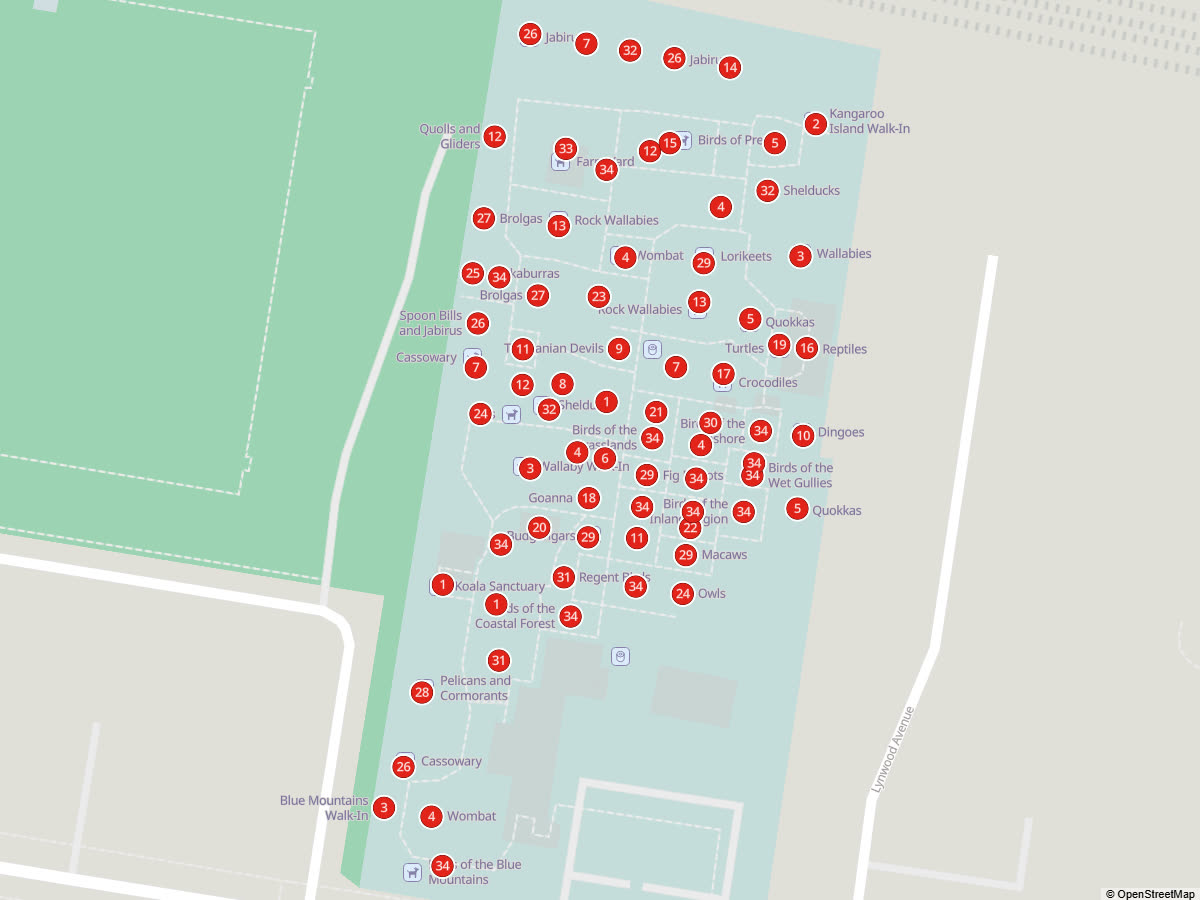
Each red dot is an enclosure, numbered as in the guide. Some animals live in several enclosures, so a number can appear more than once.
All 34 animal stories
Every story of the guide, by its number on the map, with its first line:
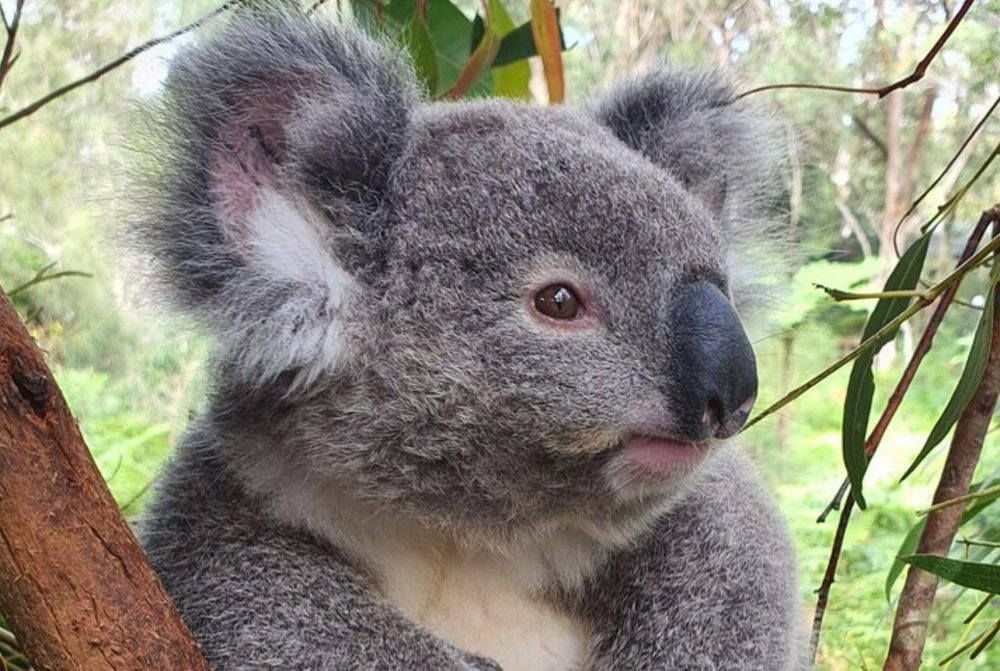
- Koalas — The name comes from the Sydney region: the Dharug people called this animal "gula".
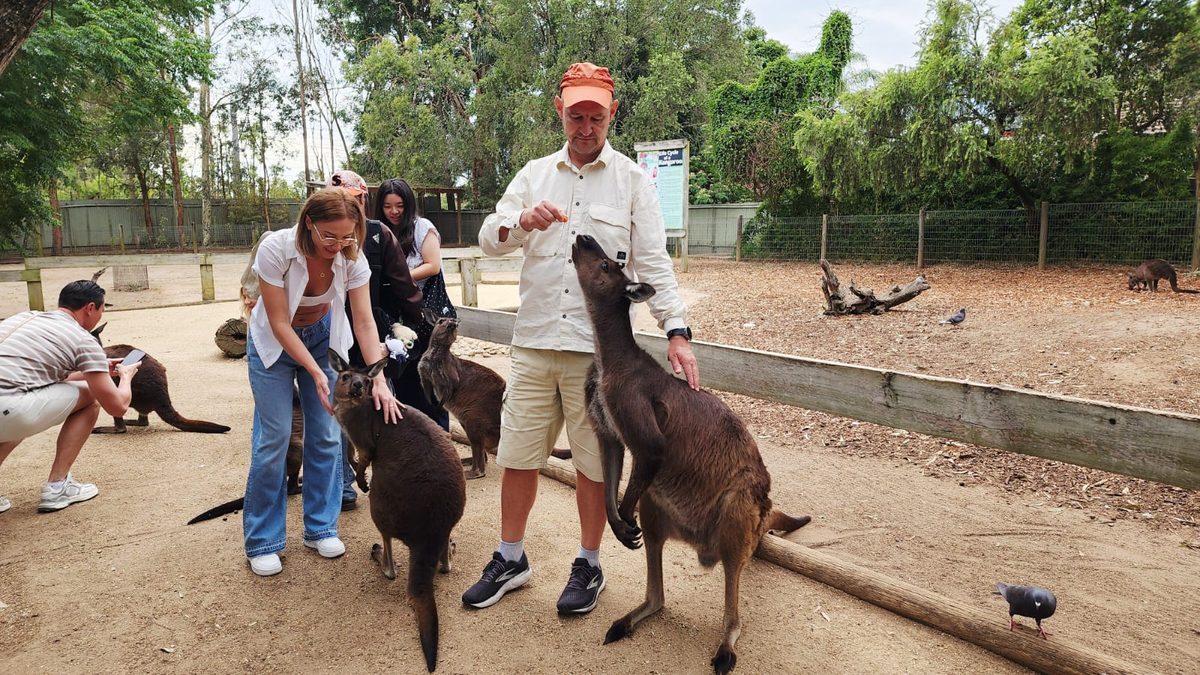
- Kangaroo Island Walk-In: kangaroos — A group of kangaroos is called a mob. A big male is a boomer, a female is a flyer, and a baby, of course, is a joey.
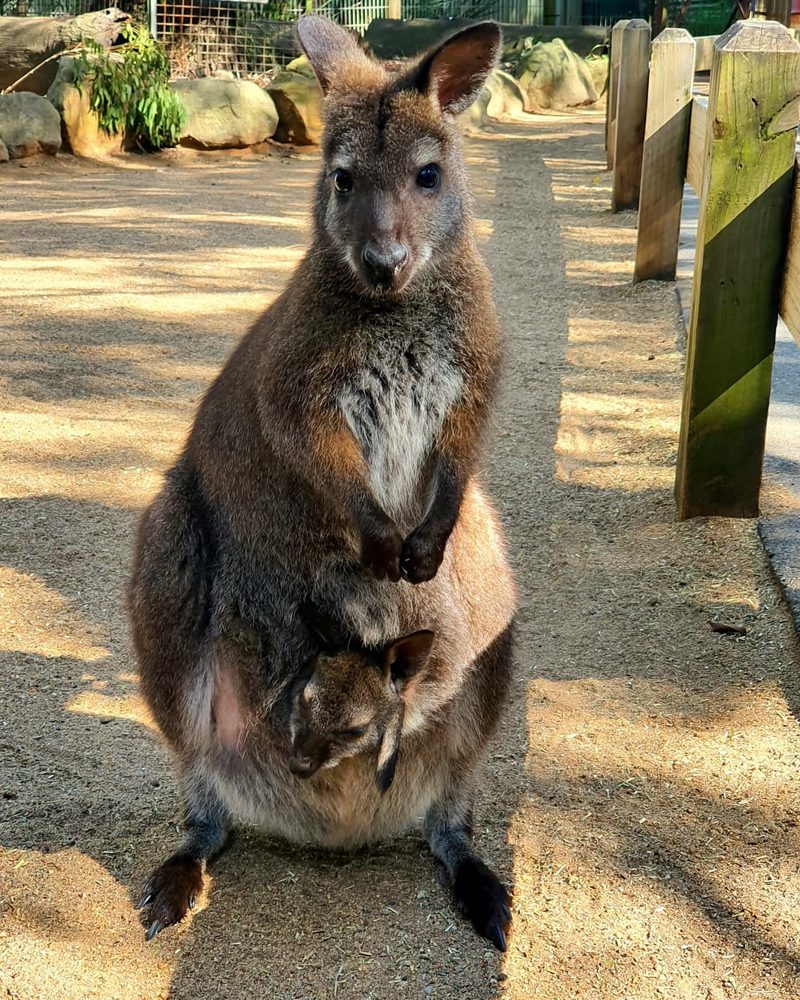
- Wallabies and pademelons — The red-necked wallaby takes its name from the reddish fur across its neck and shoulders.
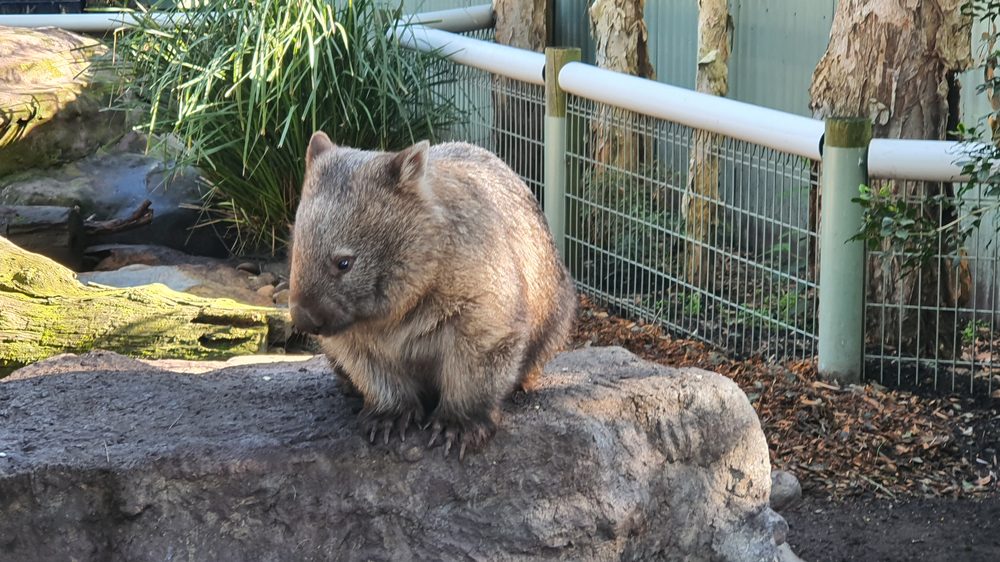
- Wombats — Wombats live slowly. By day they sleep in their burrows, where the air stays cool and damp even in a hot summer, and they come out to graze in the evening and at night.
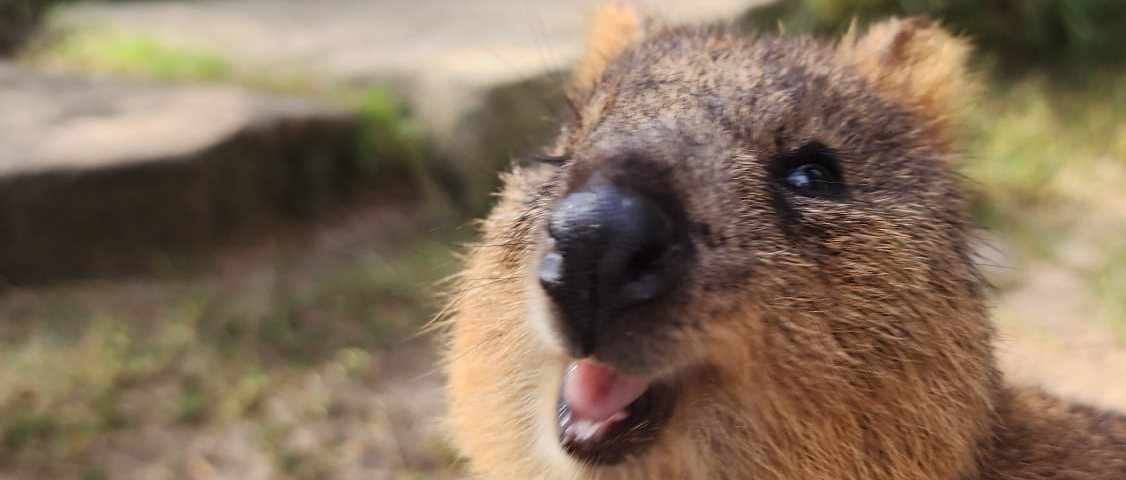
- Quokkas — Its name comes from the Noongar language of south-western Australia.
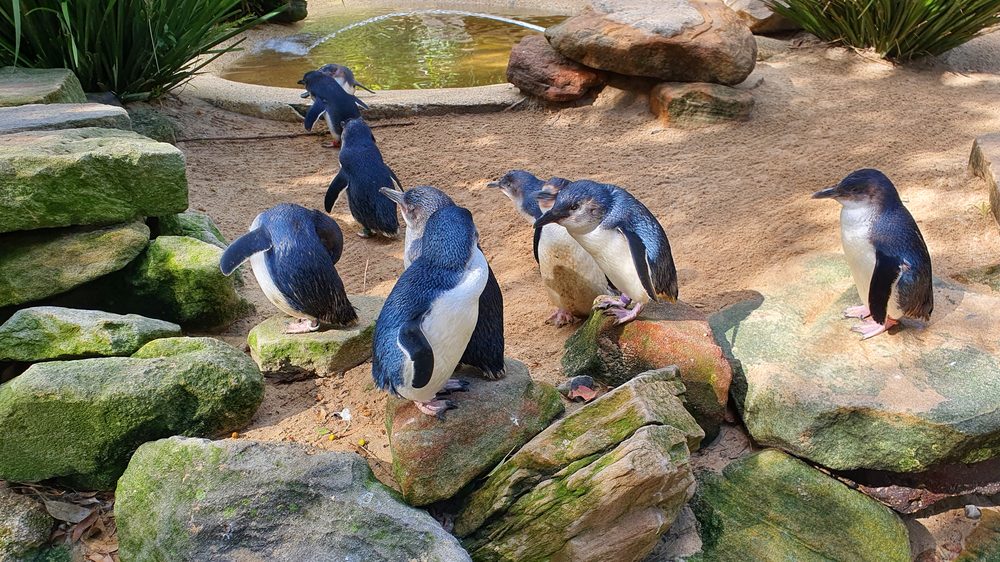
- Little penguins — They live on small fish, such as pilchards and anchovies, and on squid.
- Cassowaries — Adult cassowaries really are loners: each keeps its own patch of forest, and males and females meet only to breed.
- Tree-kangaroo — Look at the coat: soft reddish-brown, with golden face, belly and limbs, and two golden stripes running up the back.
- Tasmanian devils — The devil's scientific name, Sarcophilus, means "lover of meat", and that is fair.
- Dingoes — The word "dingo" was born right here, in the Sydney region. In 1789 Watkin Tench, an officer of the First Fleet, wrote that the local people called their dog "dingo".
- Echidnas — Look at the spines. They are hairs, made of the same material as your fingernails, and between them grows a coat of ordinary fur.
- Quolls and gliders — Australia has four kinds of quoll, and the spotted-tailed is the biggest.
- Rock-wallabies — Look for the yellow-footed and the brush-tailed rock-wallaby.
- Emus — Look closely at an emu's feathers. Each quill carries not one feather but two, so the coat looks like shaggy hair.
- Birds of prey — The black-breasted buzzard is not really a buzzard. It is an Australian kite, a bird of the dry inland and the north, and in flight you can tell it by a round white window near the tip of each wing.
- The reptile house: snakes — Australia has about a hundred and forty kinds of land snake, and about a hundred of them are venomous.
- Bruiser the saltwater crocodile — A saltie cannot chew. It grabs its prey, drags it under and spins its whole body in a death roll, to tear off a piece small enough to swallow.
- Goannas — Most lizards cannot run and breathe at the same time. A goanna can: it pumps air into its lungs with its throat, so it keeps going much longer than other lizards.
- Turtles — The eastern long-necked turtle, common in the creeks and dams around Sydney, has a neck almost as long as its shell.
- Bilbies and ghost bats — A bilby sees poorly. It finds its food by smell and by hearing: insects and their grubs, seeds, bulbs and fungi, dug out with strong front claws.
- Flying-foxes — Flying-foxes do not use echolocation like small bats; they find their food with big eyes and a keen sense of smell.
- Black cockatoos — Watch what they do with the beak. The yellow-tailed black-cockatoo rips open the bark and wood of living trees to pull out the fat grubs of wood-boring moths.
- Cockatoos — Cockatoos are among the cleverest birds. In Sydney, sulphur-crested cockatoos have learned to lift the lids of household rubbish bins to get at the food inside.
- Owls — Look an owl in the face. Its eyes are so big that they cannot move in their sockets, so the owl turns its whole head instead, about three quarters of a full circle.
- Kookaburras — Its famous laugh is not a joke. It is a family song that tells the neighbours: this territory is taken.
- Jabirus and spoonbills — A jabiru strides slowly through shallow water and stabs with its heavy black bill: fish, frogs, crabs, even small turtles.
- Brolgas — Brolgas are famous dancers. A pair, or sometimes a whole flock, bows, jumps high with open wings, tosses grass into the air and trumpets.
- Pelicans and cormorants — Pelicans are superb fliers. They ride rising warm air, high up, with hardly a wingbeat.
- Lorikeets, budgies and other parrots — Rainbow lorikeets have a tongue tipped with a tiny brush, for licking nectar and pollen from flowers.
- Gouldian finches — It was named by the English naturalist John Gould after his wife, Elizabeth, who painted many of the birds in his books.
- Bowerbirds — The bower is not a nest. It is a stage to win a female. She inspects the bowers of several males, watches each one dance and call, and chooses.
- Shelducks and geese — Shelducks are large, handsome ducks. The Australian shelduck has a dark green head with a white ring around the neck and a chestnut chest.
- The farmyard — The farmyard animals came with the European settlers. In 1788 the First Fleet brought cattle, sheep, goats, pigs, horses and poultry to Sydney Cove.
- The habitat aviaries — Look for some of the characters. The noisy pitta of the rainforest is a colourful ground bird that smashes snails on its favourite stone, its anvil.
The podcast about the park
A podcast about Featherdale in eight parts, half an hour: the story of the park and of the animals that live in it. In English the guide also carries the animal podcasts of our Sydney guide — kangaroos, the animals brought to Australia, whales and more.
Get the full guide
Access is sold by time, not by tour. One pass opens every guide we have — Sydney, the Sydney Light Rail, the Blue Mountains, Featherdale Wildlife Park, the Hunter Valley, Melbourne, the City Circle tram, the Great Ocean Road, the Dandenongs with the Yarra Valley, the Gold Coast and Cairns with the Daintree — in English and in Russian, and Sydney and Featherdale in Japanese and Korean too. The time starts when you first open your link.
↓ Tap a price to pay — every pass opens every guide
Secure payment via Square • card, Apple Pay and Google Pay
Free without signing up: the map, every story with ▶ Listen and the podcast. With a pass from A$35, Start Audio Tour plays each story by itself as you walk through the park.
Runs in the browser of your phone, nothing to install. For playing with the screen off there is the app: App Store · Google Play.
Other guides
By Andrew Sorokin, Sydney guide since 2006.